An enlarged male chest can come from glandular breast tissue, excess fat, loose skin, or a combination of these. Knowing which tissue is responsible matters because treatment differs for each one. At Park Meadows Cosmetic Surgery in Lone Tree, board-certified plastic and reconstructive surgeon Jeremy Z. Williams, MD performs male breast reduction as part of our plastic surgery procedures for men.

What Is Gynecomastia?
Gynecomastia is an increase in glandular breast tissue in men. It may affect one or both sides and can develop at different ages.
Pseudogynecomastia looks similar but is caused mainly by fatty tissue. Weight loss may reduce fat-related chest fullness. Firm glandular tissue does not respond to diet and exercise in the same way.
Some men have both fat and glandular tissue, which can change the surgical plan.
Why Does Gynecomastia Develop?
Hormonal changes are a common contributor. Certain medications, health conditions, anabolic steroid exposure, alcohol or drug use, and other factors may also play a role.
Persistent or changing breast enlargement sometimes needs medical evaluation before cosmetic surgery. If you think a prescription medication could be involved, speak with the clinician who prescribed it rather than stopping it on your own.
Our article on adult-onset gynecomastia explains why chest enlargement can sometimes appear later in life.
Is the Chest Fullness Glandular Tissue, Fat, or Both?
The first step is determining what is creating the fullness.
True gynecomastia involves glandular tissue beneath or around the nipple. Pseudogynecomastia is primarily excess fat. The distinction matters because the treatments work differently:
- Liposuction removes fatty tissue and may be useful when fat makes up a large part of the fullness.
- Direct excision removes firm glandular tissue that cannot be suctioned away.
- Liposuction plus excision may be used when both fat and gland are present.
- Skin removal may be needed when substantial laxity remains.
Our male liposuction page explains how fat reduction differs from gland removal.

Who Is a Candidate for Male Breast Reduction?
Surgery may make sense when chest enlargement persists after treatable causes have been considered and the appearance or physical discomfort continues to bother you.
Good candidates are generally healthy, at a stable weight, able to stop smoking around the time of surgery, and clear about what male breast reduction can change.
A new hard lump, nipple discharge or bleeding, skin changes, or another unexplained breast symptom should be medically evaluated instead of assumed to be routine gynecomastia.
What Happens During Gynecomastia Surgery?
Your operation depends on the amount of fat, glandular tissue, and loose skin present.
Our surgeons may use liposuction, direct excision, or both. More significant cases can also require skin removal. Incision length and placement therefore vary from patient to patient.
Surgery is performed at Park Meadows Outpatient Surgery, our state-licensed, The Joint Commission-accredited center in Lone Tree.
What Is Recovery Like?

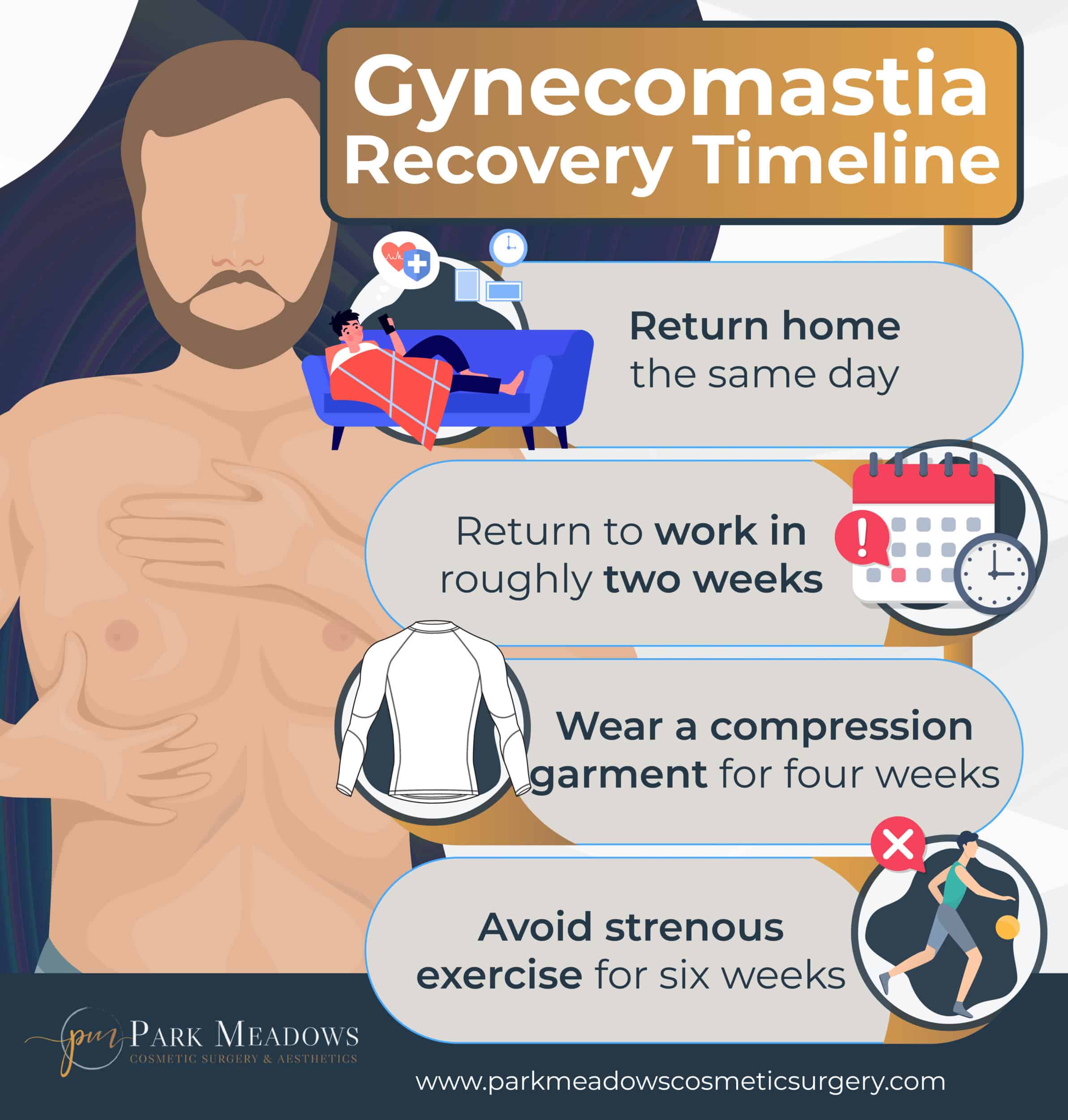
Swelling and bruising are expected during early healing. Our male breast reduction recovery guidance covers compression garments, activity limits, lifting restrictions, and the gradual return to exercise.
Many men with nonphysical jobs return to work within about two weeks. The chest continues to settle over the following months, and temporary nipple sensitivity or numbness can occur.


Why Choose Park Meadows Cosmetic Surgery for Gynecomastia Treatment in Lone Tree?
Dr. Christopher Williams completed eight years of plastic and reconstructive surgery training at Johns Hopkins and later pursued additional microsurgical training. Dr. Jeremy Williams completed seven years of plastic, reconstructive, and aesthetic surgery training there and spent a year conducting plastic surgery research.
Their backgrounds in aesthetic, reconstructive, breast, and body surgery help us choose the technique according to the tissue actually causing the chest enlargement.
Frequently Asked Questions
Exercise can reduce body fat and may improve pseudogynecomastia. It cannot directly remove firm glandular breast tissue.
Recurrence is possible if a contributing factor develops or returns. Hormonal changes, certain medications, anabolic steroids, and other factors can affect chest tissue later.
No. The operation depends on whether the fullness comes from fat, glandular tissue, or both.
Scarring is unavoidable with surgery. Smaller corrections may use incisions near the areola, while more extensive skin removal can require longer scars.
Gynecomastia itself is benign. A new lump, nipple bleeding or discharge, skin changes, or unexplained one-sided findings should still be medically evaluated.
Results can remain stable for years when contributing factors are controlled and your weight stays relatively steady. Aging, hormonal shifts, medication changes, or other influences can still affect the chest later.
Meet With a Male Breast Reduction Surgeon in Lone Tree
If you are unsure whether your chest fullness comes from glandular tissue, fat, or both, contact us at Park Meadows Cosmetic Surgery in Lone Tree. Call 303-706-1100 to discuss what is creating the fullness and which type of correction may fit your anatomy.